

Blogs And Portals
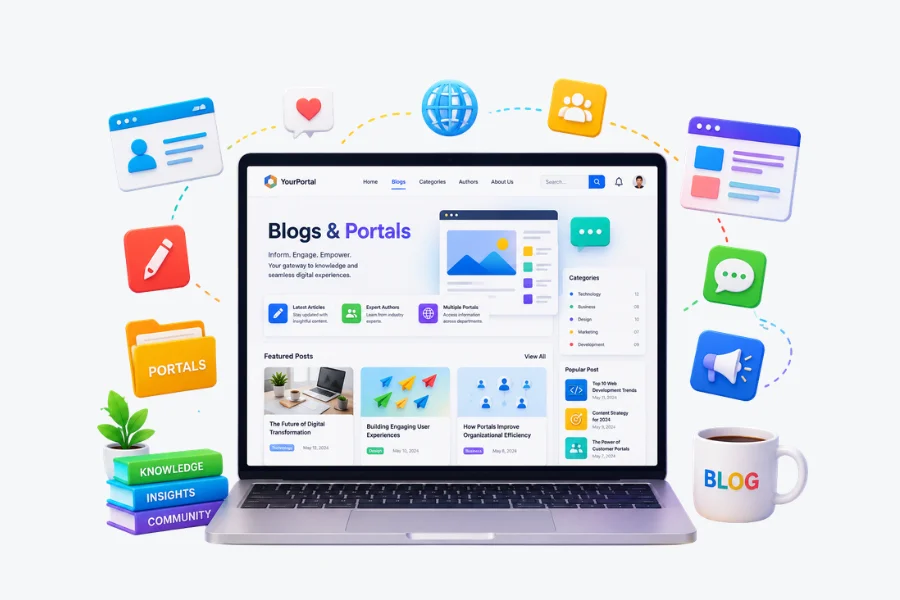
A blog or portal gives your business a place to share news, ideas, updates and useful information with your audience. It could be a company blog, an online magazine, an industry news website or a knowledge hub. Whatever the purpose, visitors should be able to find what they need without having to search through endless pages.
At 9to5 Networks, we build blogs and portals that are easy to browse and simple to manage. We work on the design, page layout and features your platform needs, from categories and tags to author profiles and search options. Your team gets a practical way to publish content, while visitors get a better experience.
Every new article can give search engines another page to discover. When the content is useful, accessible and worth sharing, it can also bring new visitors to your website over time.
Content That Connects
Give readers a reason to explore your website and make publishing easier for your team.
- A simple browsing experience
- Easy-to-use content management
- Room to add new sections and features
- SEO-friendly page structure
- Categories and tags for different topics
- Search tools to help visitors find articles
Powerful Features
A blog or portal needs more than a page where you can post articles. As the number of posts grows, visitors need a way to find older stories, browse topics and move between related content.
We can add features such as author profiles, article categories, tags, featured posts, image galleries, media libraries and search options. The exact setup depends on what you plan to publish and who will be using the platform.
You may want to share company updates, publish industry news, post interviews or build a library of guides and resources. We plan the layout around these needs, so different types of content have their own place and are easy to find.
SEO-Friendly Structure
Publishing good articles is only one part of running a successful blog. The way those articles are arranged also matters. Visitors should be able to move between topics, find related posts and understand what each page is about.
We build blogs and portals with sensible URLs, page titles, categories, internal links and navigation. These details help search engines understand your content and give readers a better way to explore the website.
Each published article can become a separate page that Google may discover and index. However, indexing is not guaranteed, and simply adding more posts does not automatically improve rankings or domain authority. The content still needs to be useful, original and relevant to the people searching for it.
For more information, see Google’s SEO Starter Guide.
Content Management
Publishing should not feel like a technical task every time you have something new to share. Your team should be able to add an article, upload its images, make changes and publish it without having to edit website code.
We set up content management systems that let authorized users handle these everyday tasks. Posts can be grouped by category, assigned to authors, edited when information changes and scheduled for publication where the platform supports it.
For websites built with WordPress, we can arrange the dashboard and content sections around your publishing needs. This makes it easier for your team to look after the website after launch.
Built for Growth
A blog may start with a handful of articles. Over time, you could have hundreds of posts, several authors, new categories and different types of resources. The website should be able to handle those changes without becoming difficult to use.
We plan the content structure with future additions in mind. New sections, author pages, topic categories and other features can be introduced as your publishing needs change.
There is no need to add every possible feature from day one. We focus on what the platform needs now while keeping future expansion in view.
Content That Grows
A useful blog gives people a reason to return. New articles can answer common questions, share company news, explain industry topics or offer practical advice. Over time, these posts can build a library of information around your business.
The way that information is presented matters, too. Readers should be able to move from one article to another, browse a topic they are interested in or use search to find a particular post.
At 9to5 Networks, we build content platforms that make regular publishing easier and keep information organised as the library expands. Whether you are starting a company blog or developing a larger online portal, the setup can be planned around the way you intend to use it.
Why Choose 9to5 Networks?
Every blog and portal has a different purpose. A company sharing occasional updates will have different needs from a publication with several writers and new articles every day.
At 9to5 Networks, we take the time to understand what you want to publish and how visitors will use the website. From there, we work on the design, content layout and features needed to bring the platform together.
We also consider the people who will manage it. Adding a post, changing an image or updating a category should not be harder than it needs to be. Our aim is to build a website your team can use with confidence, both now and as the amount of content grows.
FAQ's
Can users search and filter content?
Yes. We can add a search bar, categories, tags and filters, depending on the type of content on your website. These options help visitors find articles, news and resources without browsing every page.
Can I manage the content myself?
Yes. If your website uses a content management system such as WordPress, you can log in to the admin dashboard to add posts, edit articles, upload images and manage categories. You won't need to write code for routine updates.
How long should a good, effective blog post be?
There is no fixed word count that works for every topic. A short article may answer a simple question, while a detailed guide may need more space. Focus on covering the subject properly and giving readers the information they came for. Adding words just to make a post longer is rarely useful.
Why should businesses invest in blogs or portals?
A blog gives businesses a place to share knowledge, answer customer questions and publish company updates. It can also attract visitors through search engines when articles cover topics people are looking for. A portal can serve a wider purpose, such as sharing industry news, resources or information with a particular audience.
Will the platform perform well with increasing traffic and content?
It can, provided the website is built and maintained with its needs in mind. Hosting, page design, image sizes, caching and the amount of content all affect performance. We consider these factors during development so the platform has room to handle future growth.
Services to Elevate Your Brand